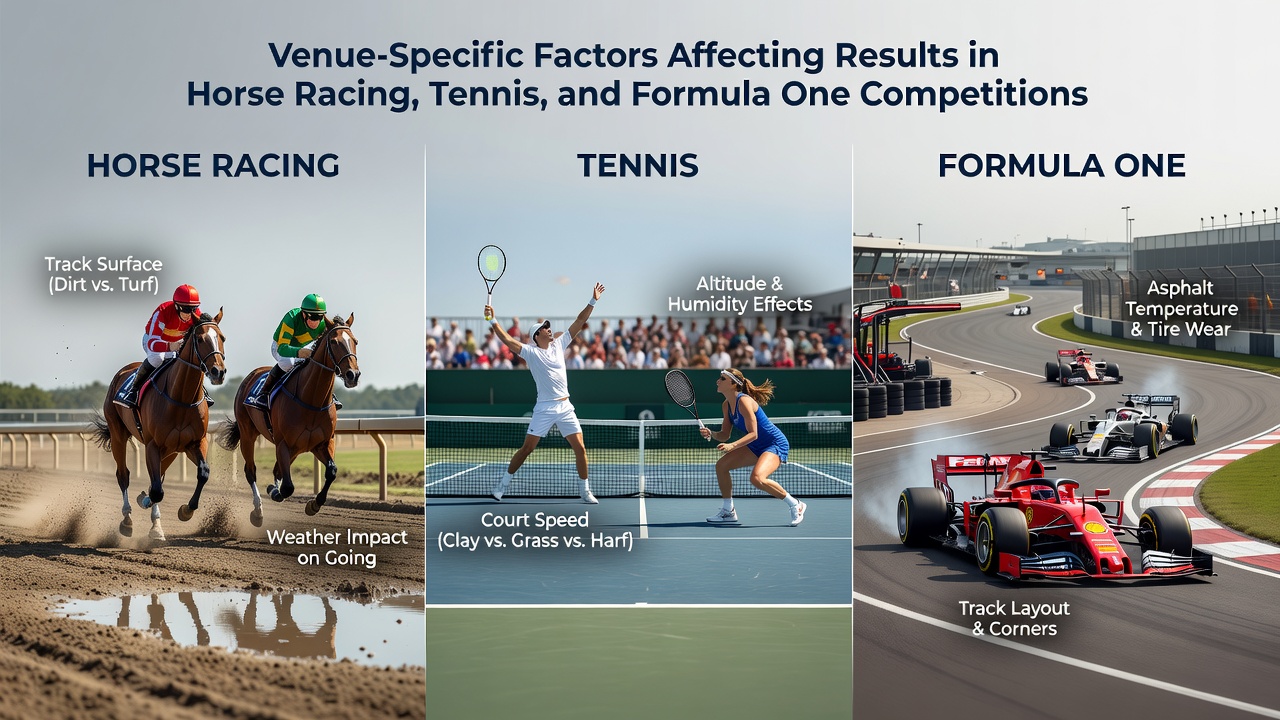
Venue-Specific Factors Affecting Results in Horse Racing, Tennis, and Formula One Competitions
Venue characteristics shape competitive outcomes across horse racing, tennis and Formula One through measurable differences in surface composition, layout geometry and environmental conditions. Research from racing authorities shows that track surfaces alter stride patterns and finishing times while court materials in tennis change ball speed and bounce height. Formula One data collected by the FIA indicates that circuit elevation changes and corner radii directly affect aerodynamic setups and tyre wear rates.
Horse Racing Track Variables
Dirt, turf and synthetic surfaces produce distinct performance profiles because each material interacts differently with hoof impact and moisture levels. Observers note that left-handed versus right-handed turns influence how horses conserve energy through curves and observers at North American tracks record faster average times on one-way ovals compared with European right-handed circuits. Altitude at venues above 1 500 metres reduces oxygen availability which lengthens race times by measurable margins according to studies compiled by Racing Australia.
Track length and banking angles further modify results. Longer straights allow stamina-dominant horses to close gaps while tight turns favour agility. Data from the Australian Racing Board reveals that horses with prior starts at the same venue post win percentages several points above their overall career averages because they adapt to local camber and rail positions. Weather events such as heavy rain convert turf into holding ground which slows times and shifts advantage toward horses proven on soft or heavy going.
Tennis Court Surface Effects
Clay, grass and hard courts dictate rally length and shot selection because friction coefficients and ball rebound angles vary systematically. Clay courts slow the ball and produce higher bounces which extend points and reward players who construct rallies from the baseline. Grass surfaces accelerate the ball and keep bounces low which shortens exchanges and benefits serve-volley tactics. Hard courts occupy an intermediate range yet still differ between manufacturers with some formulations adding extra speed or grip.
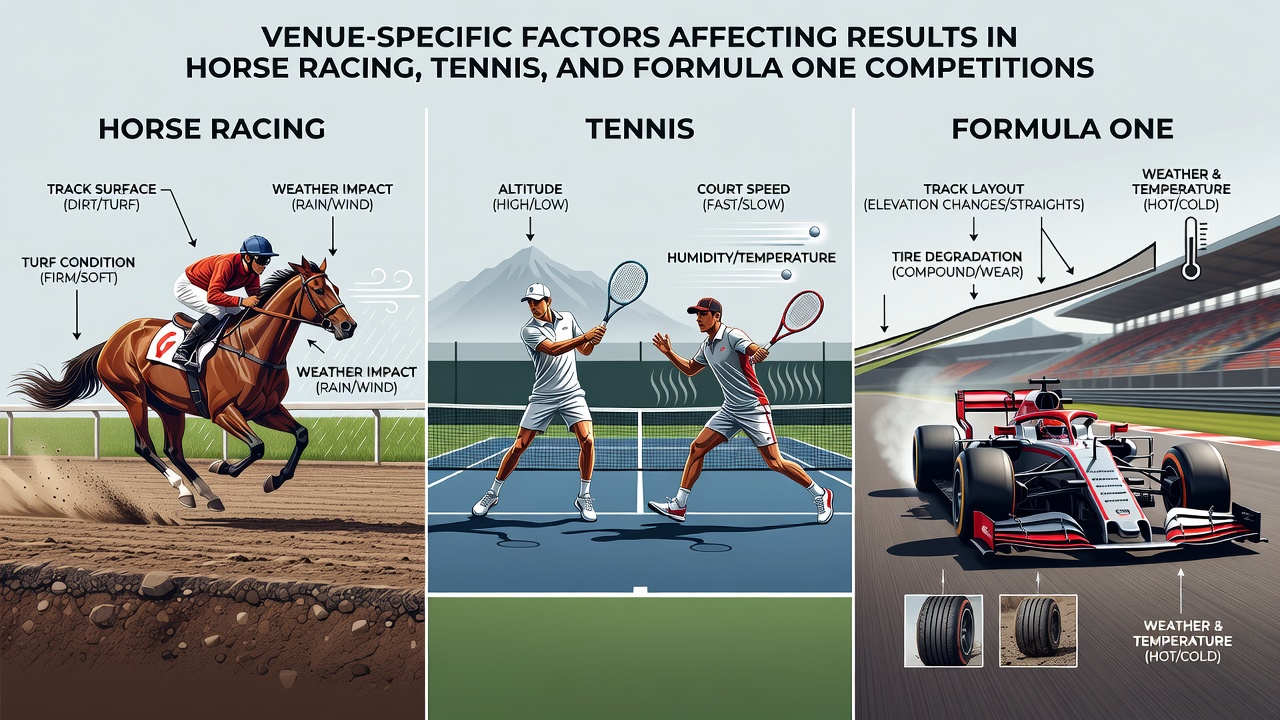
Altitude modifies these baseline effects. Venues located at elevation experience lower air density which reduces drag and allows serves to travel farther before dipping. Tournament statistics compiled by the International Tennis Federation show that first-serve percentages rise at high-altitude events because the ball crosses the service box with greater velocity. Temperature and humidity also matter because warmer air lowers ball density and increases speed while high humidity can make courts slightly slower through moisture absorption.
Formula One Circuit Characteristics
Circuit layouts determine which car attributes deliver the greatest lap-time advantage. Long straights reward high top speed and low drag whereas sequences of tight corners place premium value on downforce and mechanical grip. Elevation changes at circuits such as those in Mexico or Austria alter engine power output and brake cooling requirements. FIA technical reports document that teams adjust wing angles and suspension settings to match each venue because a configuration optimal at one track produces understeer or overheating at another.
Tyre allocation and degradation rates also respond to surface texture and ambient conditions. Rougher asphalt accelerates wear which forces earlier pit stops and changes race strategy. August 2026 schedules place several events at circuits known for high temperatures which historically increase degradation and reward teams that manage tyre life effectively. Wind direction and strength further complicate setups because crosswinds affect aerodynamic balance through high-speed sections.
Comparative Patterns Across Disciplines
Each sport demonstrates that prior venue exposure correlates with improved results. Horses returning to familiar tracks, tennis players with multiple appearances on the same surface and Formula One drivers who have completed extensive laps at a circuit all exhibit statistically higher success rates. Environmental factors compound these effects because temperature, wind and precipitation interact with venue geometry to shift performance baselines.
Equipment and preparation choices adapt accordingly. Trainers select horses suited to expected ground conditions, coaches adjust practice drills to mimic tournament surfaces and engineers optimise car balance for specific corner profiles. Data collected over multiple seasons confirms that ignoring these venue-specific variables produces measurable drops in win probability.
Conclusion
Venue attributes in horse racing, tennis and Formula One operate through quantifiable physical mechanisms that alter speed, endurance and tactical options. Surface type, layout geometry, altitude and weather combine to create location-specific performance signatures. Teams, trainers and players who systematically account for these factors improve their alignment with the conditions present at each competition site.