
Uncovering Seasonal Migration Effects on Competitor Form in Cross-Border Racing and League Events
Seasonal migration in cross-border racing and league events creates measurable shifts in competitor form as athletes and teams move between hemispheres, climates, and time zones throughout the calendar year. Data from multiple sports governing bodies shows that these transitions influence training loads, recovery rates, and race-day outputs in ways that vary by event type and geographic route. Researchers tracking performance across Formula One, endurance cycling tours, and international horse racing circuits have documented consistent patterns tied to daylight exposure, temperature swings, and travel fatigue accumulated during long-haul relocations.
Patterns of Movement Across Racing Calendars
Competitors in cross-border series routinely relocate between northern and southern hemisphere venues as seasons change, which means a team finishing a European summer campaign may shift to Australian or South African winter events within weeks. Figures compiled by the International Automobile Federation reveal that Formula One squads complete between eight and twelve long-haul flights per season, with peak travel clusters occurring during the April-to-July window and again from September through November. Horse racing stables following the global circuit experience similar cycles, moving thoroughbreds from European turf meetings in summer to Australian tracks during their spring carnival period that peaks in October and November.
League-based competitions such as international rugby and field hockey add another layer because squads often travel for both domestic and continental fixtures within compressed windows. Studies published by the European College of Sport Science indicate that athletes crossing multiple time zones experience disruptions in circadian rhythms lasting five to seven days on average, with measurable drops in reaction time and endurance capacity during the first three days after arrival. These effects compound when teams repeat the pattern every two to three weeks across an extended season.
Environmental and Physiological Adjustments
Temperature differentials between departure and arrival locations force rapid physiological adaptations that directly affect muscle function and hydration status. Data collected during the 2025-2026 Australian summer racing season showed that European-trained endurance athletes required an average of nine days to stabilize core temperature responses after arriving in climates twenty degrees warmer than their prior base. Heart-rate variability readings taken pre- and post-migration demonstrated elevated resting rates persisting for up to ten days in athletes who had crossed more than six time zones.
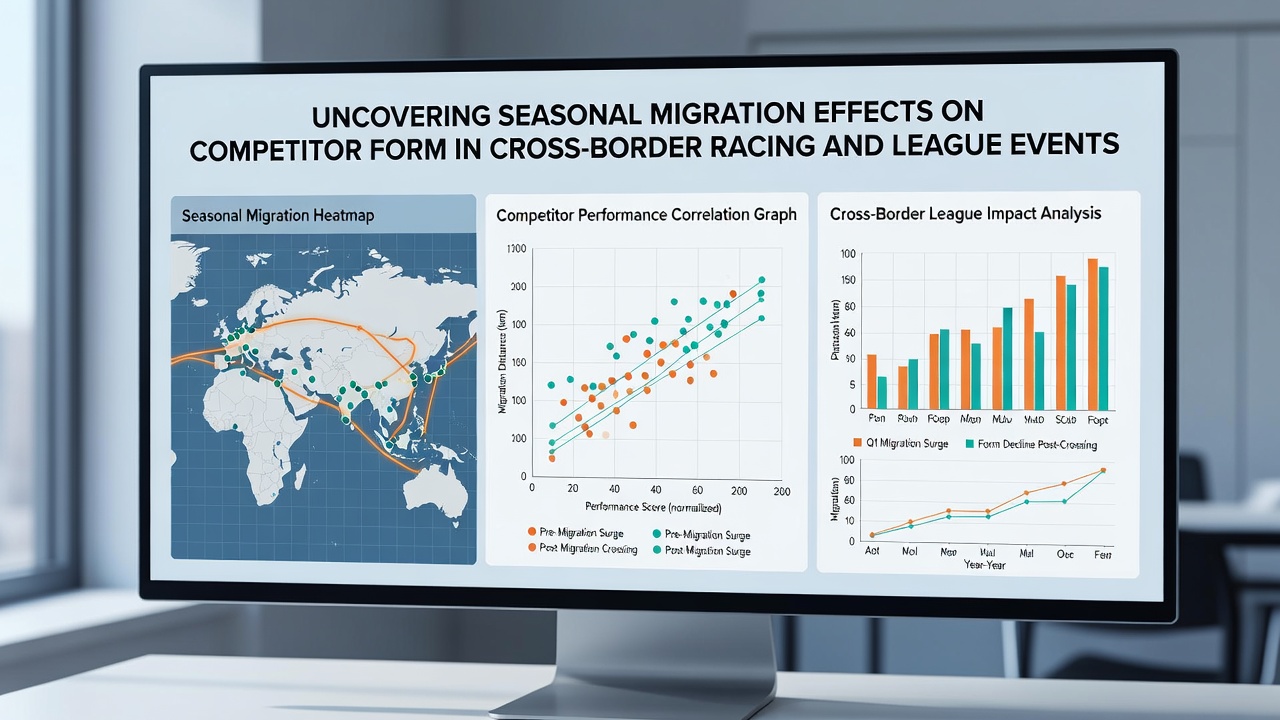
Light exposure changes also influence sleep architecture and hormone regulation. Observers monitoring competitors at the 2026 Dakar Rally noted that participants arriving from European winter conditions into South American summer daylight hours recorded altered melatonin onset times that correlated with reduced power output during the first two stages. Similar findings appear in reports from the Canadian Sport Institute, where researchers tracked cyclists preparing for multi-stage events spanning North America and Europe; those athletes exhibited slower recovery metrics when daylight duration shifted by more than four hours between training blocks.
Performance Data Across Event Types
Quantitative reviews of race results indicate that form fluctuations appear most pronounced in events requiring sustained high-intensity efforts rather than short explosive bursts. Analysis of Formula One qualifying sessions from 2023 through 2025 shows that teams arriving from a previous race held on a different continent posted lap-time variances up to 0.4 seconds slower in the opening practice sessions compared with their established benchmarks at that venue. Endurance events reveal parallel trends: participants in the Tour Down Under who had migrated from European winter training camps recorded average power outputs 3 to 5 percent below seasonal norms during the opening two stages according to aggregated team telemetry.
Horse racing data presents a distinct profile because the animals themselves undergo transport and acclimatization. Records maintained by Racing Australia indicate that European-trained horses competing in Melbourne spring meetings after long-haul shipment achieved win rates approximately 12 percent lower in their first two starts compared with their domestic Australian counterparts, with performance normalizing after roughly 18 days on the ground. League sports such as international rugby report comparable dips in tackle completion rates and sprint distances during the initial matches of a touring schedule.
August 2026 Scheduling Considerations
The August 2026 calendar places several major cross-border events in close succession, including the final European leg of the Formula One season followed immediately by preparatory events in Asia and the southern hemisphere. Scheduling data released by series organizers shows that at least four teams will complete intercontinental transfers within a 14-day window during that month, creating compressed recovery periods. Parallel timing affects horse racing stables preparing for Australian spring targets while still contesting late-summer fixtures in Britain and Ireland. Researchers at the Australian Institute of Sport have flagged this period for targeted monitoring because historical datasets suggest elevated variability in performance metrics when multiple migrations cluster within such narrow timeframes.
Conclusion
Seasonal migration produces documented and repeatable effects on competitor form that appear across racing disciplines and league events through measurable changes in physiological markers, recovery timelines, and race outputs. Data from international federations and sport science institutes continue to map these patterns as calendars evolve, providing objective benchmarks for understanding how environmental transitions influence results in cross-border competition.