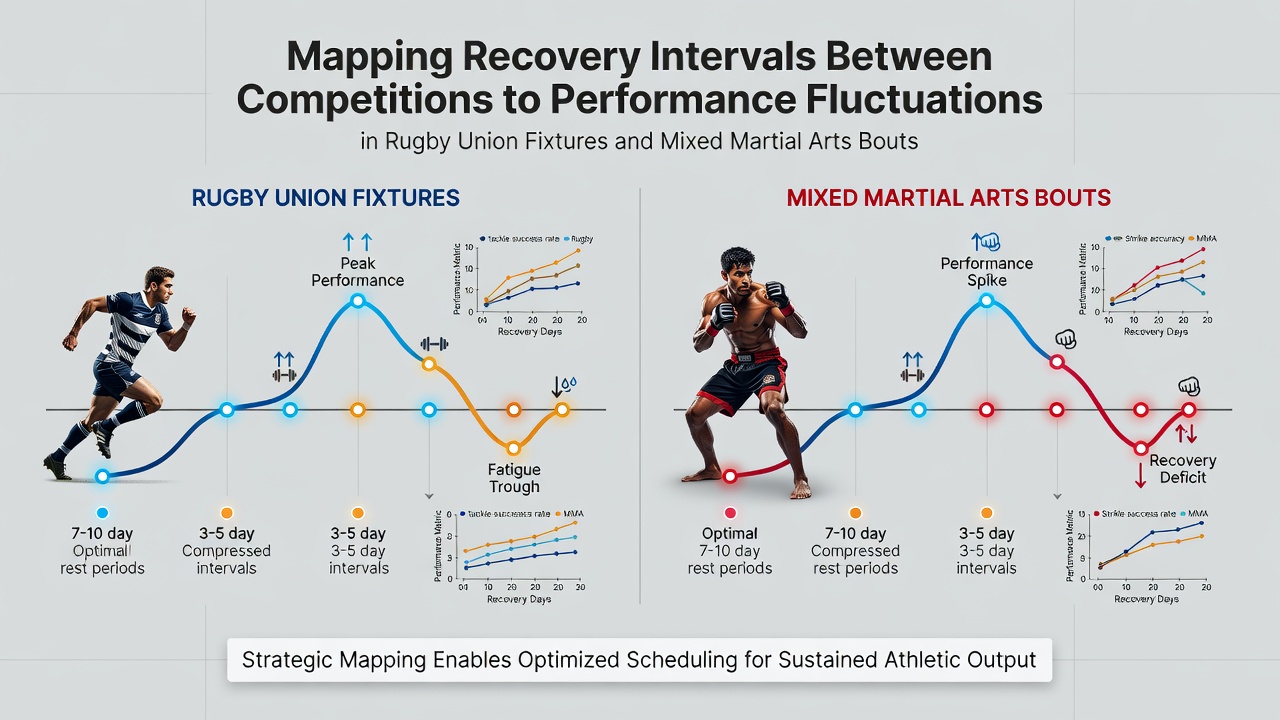
Mapping Recovery Intervals Between Competitions to Performance Fluctuations in Rugby Union Fixtures and Mixed Martial Arts Bouts
Recovery intervals between competitions shape performance outcomes across rugby union and mixed martial arts through measurable patterns in fatigue accumulation and output consistency. Data from league schedules and bout records indicate that shorter gaps correlate with shifts in key metrics such as tackle completion rates, striking accuracy, and injury incidence. Observers note these connections emerge clearly when analysts track athletes across consecutive events rather than isolated performances.
Recovery Patterns in Rugby Union Schedules
Rugby union fixtures often cluster within seven to fourteen days during domestic and international windows, which places direct pressure on physiological restoration processes. Research from the Australian Institute of Sport reveals that players returning within eight days post-match show average reductions in high-speed running distance of 12 to 18 percent compared with those granted ten or more days. Tackle success percentages also dip when recovery falls below nine days, particularly among forwards who accumulate higher collision loads during matches. League data compiled through 2026 highlight these trends persisting across Super Rugby Pacific and Premiership campaigns, where fixture congestion peaks in autumn months.
Coaches and performance staff monitor heart rate variability and neuromuscular function to quantify readiness, yet external scheduling constraints frequently override individual recovery timelines. One study tracking Premiership squads across the 2024-2025 season found that teams with multiple players on short recovery cycles experienced greater variance in scrum stability and lineout accuracy during the second half of matches. These fluctuations appear consistent rather than random, pointing to cumulative fatigue as a primary driver.
Interval Effects in Mixed Martial Arts Bouts
Mixed martial arts bout spacing differs markedly from rugby because fighters typically compete every three to six months, although some promotional calendars compress this to eight or ten weeks for select athletes. Figures from the Ultimate Fighting Championship performance database indicate that striking accuracy declines by an average of nine percent when fighters return inside ten weeks, while takedown defense rates show similar drops. Researchers at the University of Calgary documented these patterns through analysis of fight footage and training load reports spanning 2018 to 2026.
Longer intervals allow fuller restoration of connective tissue and central nervous system function, yet they also introduce risks of detraining if preparation phases extend too far. Data shows that MMA athletes who maintain structured sparring and strength programs during extended breaks preserve power output more effectively than those relying solely on rest. Performance variance narrows noticeably once recovery exceeds twelve weeks, according to longitudinal tracking of welterweight and lightweight divisions.
Comparative Observations Across Both Sports
Both rugby union and mixed martial arts display performance fluctuations tied to recovery length, although the magnitude and timing differ because of sport-specific demands. Rugby players experience weekly or bi-weekly loading that compounds muscle damage, whereas MMA competitors face acute neural fatigue from weight cutting and technical sparring. A 2025 report issued by the Canadian Sport Institute Pacific compared collision sport athletes across codes and noted that recovery windows under nine days produced elevated creatine kinase levels in rugby athletes, while MMA fighters showed greater sleep disruption when intervals shortened below ten weeks.
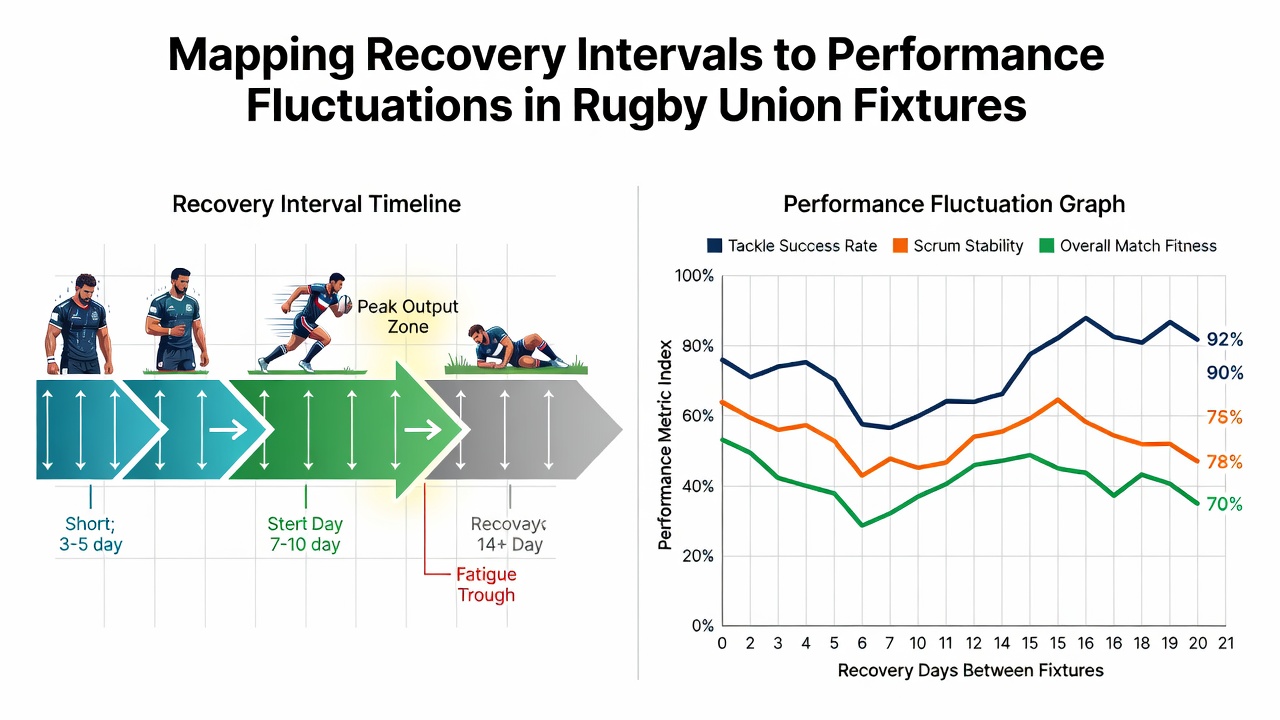
What's interesting is how both groups respond to overlapping stressors such as travel and environmental conditions. October 2026 schedules for northern hemisphere rugby tours and concurrent MMA events in Asia and North America provide fresh datasets for examining these interactions. Analysts expect continued monitoring through wearable technology to refine interval recommendations further.
Influencing Variables Beyond Time Alone
Nutrition timing, sleep quality, and prior injury history modify the relationship between recovery intervals and performance outputs. Evidence from the British Association of Sport and Exercise Sciences indicates that athletes who meet protein intake targets during short turnaround periods maintain closer to baseline power measurements than those falling short. Similarly, sleep extension protocols implemented in the forty-eight hours following competition reduce next-event error rates in both rugby and MMA cohorts.
Position-specific and weight-class demands add further layers. Front-row rugby forwards display steeper performance declines after abbreviated recoveries compared with backs, while MMA lightweights encounter larger accuracy drops than heavier divisions when bouts cluster tightly. These distinctions emerge consistently across multiple seasons and geographic regions, underscoring the need for individualized mapping rather than uniform guidelines.
Conclusion
Mapping recovery intervals against performance fluctuations supplies objective insights for rugby union and mixed martial arts stakeholders. League records, bout statistics, and physiological measurements demonstrate repeatable patterns linking shorter gaps to measurable output changes. Continued data collection through 2026 and beyond will clarify optimal windows while accounting for sport-specific variables and individual athlete profiles.